
4 Branding Lessons Learned on the Pickleball Court
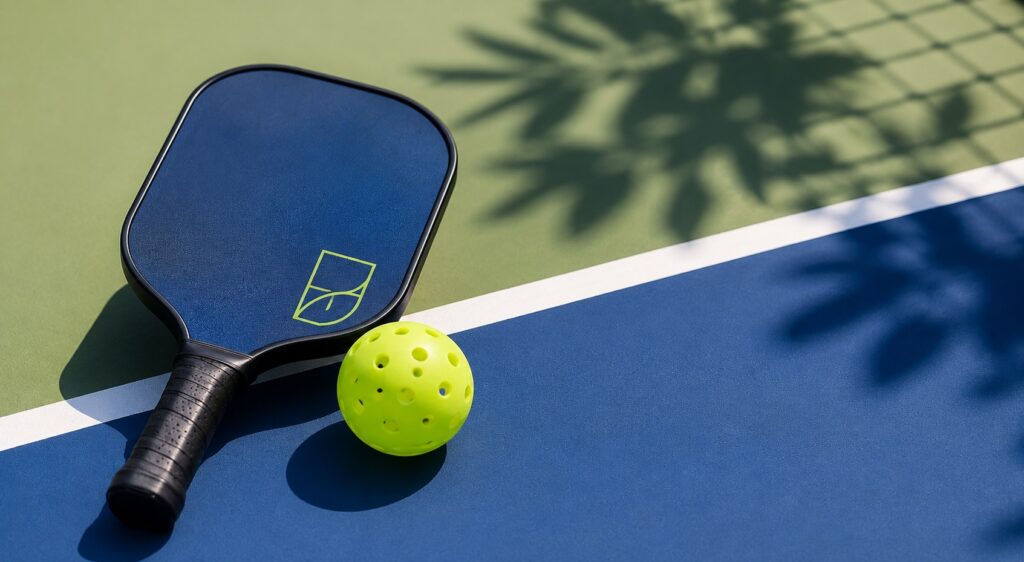
I really enjoy playing pickleball. Like many players, I’ve taken lessons and signed up for clinics to improve my third-shot drop, strengthen my serve, and help me stop popping the ball up for an easy put-away. Some of that instruction has made me a better player.
All of it has made me a better brand strategist.
The more time I spend on the pickleball court, the more I’m reminded that success – whether you’re building a winning game or a winning brand – is rarely about one perfect shot. It’s about understanding people, adapting, building relationships, and making smart decisions.
Here are four branding lessons I’ve learned between the service line and the kitchen line.
PB Lesson #1: People remember how you make them feel.
Everyone wants to play with the skilled player. But people actually prefer to play with the player who is encouraging, positive, and fun.
I’ve experienced the opposite: eye rolls after a missed shot, criticism disguised as “advice,” or the partner who spends more time pointing out mistakes than celebrating great shots.
The best players understand something bigger than winning – they’re building relationships.
Brands work the same way.
Customers may initially choose you because of your expertise, your product, or your price. They stay because of the experience you create. They remember how you treated them. Did you listen? Did you make them feel confident? Did you make working with you enjoyable?
PB Lesson #2: You can’t improve without learning the game.
When I first started playing pickleball, I thought success meant hitting the ball harder. It turns out that’s rarely the answer.
The players who improve aren’t just practicing. They’re studying strategy. They understand positioning, shot selection, probabilities, and why certain decisions work better than others.
They’re students of the game. Branding is no different. Too often organizations jump straight to tactics:
“We need a new logo.”
“Let’s redesign the website.”
“We should buy more Facebook ads.”
Those tactics are the equivalent of trying to win every point by hitting the ball harder. Without research, you’re guessing.
The strongest brands understand their customers before they create campaigns. They know what customers value, what frustrates them, what motivates them, and how they make decisions.
Smart branding begins long before the first ad or social post.
PB Lesson #3: Show up. Pay attention. Read the court.
Every pickleball game is different. Some opponents love to drive the ball. Others are devoted dinkers. Some become impatient. Some lose confidence after a few bad shots. The best players notice these patterns and adjust.
Brand leaders need the same awareness.
Every meeting, client conversation, presentation, and networking event offers clues. Is the room energized or skeptical? Are people overwhelmed? Excited? Confused?
The organizations that connect most effectively don’t deliver the same message every time. They read the room and then respond accordingly.
PB Lesson #4: Know your audience.
The way you play changes based on who’s on the other side of the net. You adapt to your opponents’ strengths, weaknesses, and style of play. That’s not changing who you are—it’s being effective.
Brands face the same challenge.
Prospective customers, loyal clients, employees, donors, and community partners all care about different things. While your brand should remain consistent, your message shouldn’t be identical for every audience. One-size-fits-all messaging rarely fits anyone.
Great brands know their audiences well enough to tailor the conversation without changing their identity.
The Real Win
Pickleball has certainly made me a better competitor. I hope it’s making me a better partner, too.
Because when the game is over, no one remembers every great shot you hit. They remember whether you were the person they hoped would be on their side of the net.
Brands earn that same privilege.
People may notice your logo, admire your product, or remember your advertising. But what keeps them coming back – and what makes them recommend you to others – is the experience of working with you.
Whether you’re standing at the kitchen line or sitting across a conference table, the goal is the same: Be the brand people want on their side.
